

Emory University HospitalVascular Surgery
AN
Allen Nelson, M.D.
Associate Professor of Surgery
Brilliant with a graft, short with careless residents. Naples is about to test his patience before his skill.
A Medical Thriller · Steven Curley, M.D.
Some secrets should stay hidden.
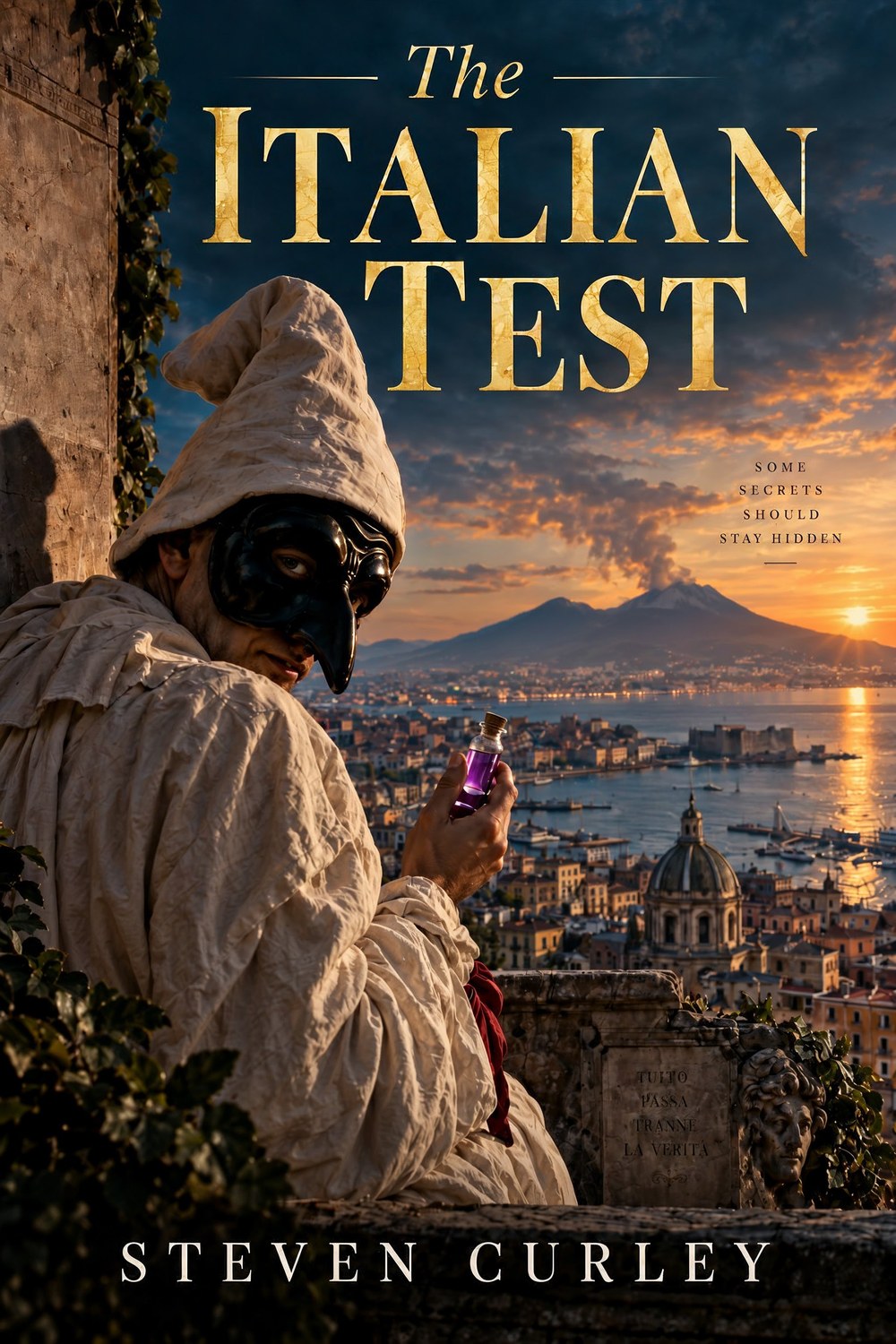
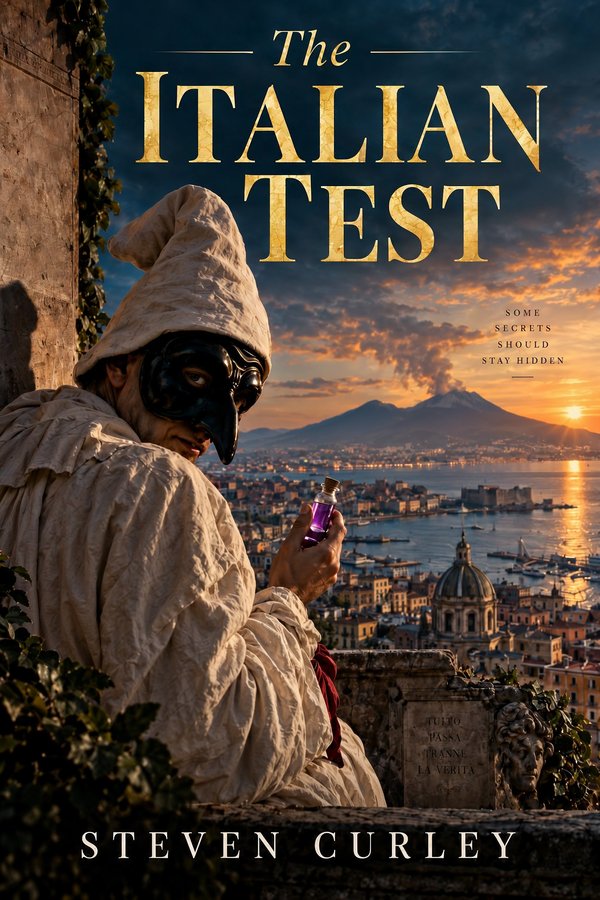
December 1995. Atlanta vascular surgeon Allen Nelson flies to Naples to lecture. Two days later, the leaders of the Campania region are dying of heart attacks, strokes and blood clots after a single dinner, and nobody can explain why.
Case File · The Story
Dr. Allen Nelson, a vascular surgeon from Emory University in Atlanta, has been invited to lecture at the University of Naples. He and his wife Leslie, a former recovery-room nurse, expect a working holiday. Instead he is scrubbing into unfamiliar operating rooms, watching breaches of protocol he would never tolerate at home, and fighting his own temper.
Then one morning the phone rings. Overnight, the president of the Campania region and his party's leaders have been rushed to two hospitals after a dinner near the football stadium. Heart attacks. Strokes. Blood clots in their legs and lungs. Food poisoning doesn't do that, and the Carabinieri have no suspects. The Neapolitan surgeons need an expert, and Allen is the expert in the room.
The answer lies two centuries back, in the notebooks of an 18th-century anatomist who learned how to make blood turn against the living. Someone in Naples has found them, and is running the test again.
"I've never encountered abnormal clotting, heart attacks, or strokes with food poisoning."
Dr. Allen Nelson, Chapter 12
Specimen · Naples, Italy
Medical Staff · The Characters
Associate Professor of Surgery
Brilliant with a graft, short with careless residents. Naples is about to test his patience before his skill.
Former Recovery Room Nurse
South Carolina drawl, Italian grandmother, and a nurse's instinct for when something is wrong.
Assistant Professor of Surgery
Runs red lights, orders five courses, and believes there is always a way.
Chief of Vascular Surgery
Old-school and smoking in the hospital. When the strange cases arrive, he wants the American.
Gynecologist · Federico II
Franco's medical-school classmate, a rising star in regional politics, and one of the dinner guests rushed to the ER at dawn.
Surgeon & Anatomist to the Prince
Built a preserved human vascular system for the Prince of Sansevero, and kept his method in a private notebook.
Clinical Timeline
In the monastery's pharmacy archives, Salerno finds records of a failed remedy for insomnia. Its patients suffered strokes and heart attacks within hours. He copies it all in private code.
Salerno unveils a woman's skeleton covered in a complete, preserved vascular system to the Prince of Sansevero and his Masonic brothers.
Raimondo di Sangro's anatomical machines are moved to the basement of his family chapel, where they still stand today. Salerno's notebook is another matter.
A quiet death in an apartment near Piazza del Plebiscito. Elderly, frail, grieving. No one would think to ask questions.
Allen and Leslie Nelson cross the Atlantic, courtesy of their hosts at the University of Naples.
Allen operates in Naples: an open aortic aneurysm repair and a stent. An unmasked heart surgeon walks straight up to the open incision.
Antipasti, wine and simmering sauces. One guest eats only soup prepared separately, and leaves early.
"We have a big problem. We need help."
Franco drives the Nelsons to Mercogliano and the Abbey of Loreto, where an old pharmacy and an older library are waiting.
Laboratory Report · 5 Dec 1995
Contaminated food means nausea, vomiting, diarrhea, belly pain and fever. It doesn't give a table of politicians heart attacks, strokes and blood clots in their legs and lungs. Allen searches the hospital library's hematology textbooks and calls a toxicologist friend at the CDC in Atlanta. Nobody has ever seen anything like it.
Fact or Fiction
Tap a card for the diagnosis. Answers come from the author's notes.
Read an Excerpt
Giuseppe Salerno, surgeon and anatomist from Palermo, paced anxiously in the luxuriously decorated and frescoed room. He stared down, his steps following the labyrinthine pattern created by the black-and-white marble floor. He was effectively alone. The two mute servants standing beside the door refused to make eye contact with him, struggling to maintain composed, expressionless demeanors despite the recurring waves of revulsion that came from being in the room with Salerno’s creation. But Salerno didn’t care what the menial attendants thought or felt. The only opinion that mattered was that of his benefactor, Raimondo di Sangro, Prince of Sansevero.
At that moment the double doors flanked by the servants burst open and Prince Raimondo marched into the salon. He acknowledged Salerno with only a brief nod as he swept past, stopping alarmingly close to the Salerno’s creation. Salerno hoped his benefactor didn’t notice perspiration beading on his forehead and dampening the clothing at his armpits. The anatomist had toiled for almost two years to create the work just revealed to his patron.
Raimondo, hands initially grasped behind his back, tilted his head from side to side, inspecting details on the head and neck, ambling in a circle around the figure, stooping occasionally to observe and gently touch various areas and structures in the body.
Salerno stood silently, perspiring more heavily, knowing the prince would ask for information only if he didn’t recall the name of an anatomic detail.
Suddenly, the prince wheeled to face Salerno, startling the doctor. A brief smile appeared on the prince’s sallow face. “Salerno, you have created a remarkable piece of work! Congratulations, maestro!”
The prince extended his limp right hand toward the anatomist, who obsequiously bowed and kissed the ring bearing the family crest. “Thank you, Your Highness,” Salerno croaked.
It was nostalgic to hear the Italians call the operating room “the theater,” a holdover term from earlier in the century when surgeons taught surgical anatomy and techniques to apprentices who stood watching from tiers of raised platforms around the table centered in the room.
An uncovered naked man was asleep and on a ventilator on the operating room table.
Allen’s anxiety spiked. He had no idea what role Consoli expected him to play. Furthermore, he didn’t know the patient’s diagnosis or the planned operation.
Consoli walked over to X-ray films hanging from a lit view box on the wall opposite the door. “Allen, my students speak little English, so I explain in Italian. Franco translates for you.”
Scanning the images, Allen immediately detected the markedly dilated aorta in the belly, along with smaller bulges in both arteries splitting off to supply blood to the legs. Franco translated quietly as Consoli spoke authoritatively to the group. Arms folded, Allen listened. Consoli described the risk of rupture of the ballooned blood vessels—with death an almost certain result—if they were not replaced.
Then he turned to Allen. “We wash our hands, Allen. We do this operation the old way: we make an open incision.”
The two surgeons and Franco scrubbed their arms and hands, rinsing off the soap. Holding their hands at shoulder level, water dripping down off their elbows, they reentered the operating suite. Consoli strode to the back of the room where a female nurse held a metal pitcher. He held his hands over a basin while she poured clear, colorless liquid over them. He clenched and unclenched his fists and shook his hands vigorously, spattering the table and the nurse with droplets, then accepted a towel from her to dry his hands while Allen observed, perplexed. This was not a standard step before an operation in America.
Allen stepped toward the scrub nurse to receive a towel, but Consoli protested. “Allen, you don’t take the water?”
Being in Italy, Allen wondered if Italian surgeons rinsed their hands with holy water before an operation. “What is the purpose of the water, Ugo?”
Consoli was surprised. “It is chilled, sterile water. It refreshes your fingers before an operation. You do not do this in the United States?”
Smiling behind his mask, Allen couldn’t wait to tell the OR nurses at Emory about this practice. He imagined where they would offer to pour chilled water if he attempted to initiate this ritual.
He accepted a pour of the cold water, thanking the young nurse, and toweled off his hands. He informed Consoli that this was a novel step not performed in America and thanked him for the idea. Consoli simply shook his head before muttering something incomprehensible in Italian.
After placing sterile drapes leaving only the patient’s belly uncovered, Consoli made an incision extending from the bottom of the breast bone down the belly to the pubic bone. “Big operation, big surgeon, big incision,” Consoli announced matter-of-factly.
Allen clenched his teeth, saying nothing.
Consoli’s junior staff and trainees stood on metal steps they pulled up behind the surgeons. Allen and Consoli moved intestines to one side exposing the large blood vessels at the back of the belly cavity, freeing these blood vessels from other tissues. Anticlotting medicine was given by the anesthesiologist and clamps were placed above and below the abnormally dilated portions of the aorta and each large artery going to the legs. The two surgeons opened the markedly dilated aorta and the vessels to the legs with scissors and then sewed a large-diameter synthetic graft to the open end of the aorta just below the arteries to the kidneys before sewing the two smaller-diameter limbs in the Y-shaped graft, one limb each providing blood flow to the legs. Clamps were removed and pulsatile blood flow to both legs was confirmed by a nurse.
Consoli reached over the open belly and shook Allen’s hand.
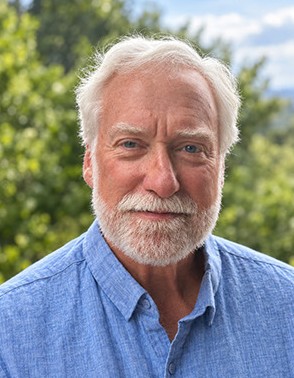
Steven Curley, M.D.
Santa Fe, New Mexico
Allen & Leslie Nelson
Naples, 1995. A poisoned dinner, a centuries-old secret, and an American vascular surgeon who can't stop asking questions.
The backstory of Allen and Leslie Nelson: general surgery residency in 1980s America, with all its rigor, drudgery, joy and terrifying moments.
[Placeholder] Short description of this book.
[Placeholder] Short description of this book.
Prescription
Rx Read in one sitting. Do not start before bedtime.